AI for Advisors Podcast

Conversations with the people actually changing how advice gets delivered: with AI, workflows, and a little healthy skepticism.

Where AI meets AUM

Real advisor AI. No hype. Just what works.

Every week, Mark and James sit down with RIAs, WealthTech founders, and AI operators to talk about what's actually working in advisory firms right now. No futurist keynotes, no vendor slide decks. Just real use cases, what broke, what shipped, and what moved the needle.

Your Hosts

Mark builds products. James fixes implementations. Together they host a weekly show about what's actually working in advisor AI, and what definitely isn't.

01
Mark Heynen

I feel like note-taking is like the gateway drug for AI and I want to talk about the hard drugs here.

Mark Heynen

Co-Founder & CPO, Knapsack AI

Meet Mark
02
James Cantwell

AI won't replace the relationship, but it sure as shit can enhance the relationship

James Cantwell

Founder, The Cantwell Advisory & WealthTechSelect

Meet James

Hosts Who've Done the Work

Built companies. Sat in investment committee meetings. Led implementations and seen where they fall apart. This isn't commentary from the sidelines. It's a front-row seat to how advisor tech actually gets built and adopted.

Builders, Not Pitchers

Guests range from RIA leaders and WealthTech founders to AI researchers and product builders who live in your workflows every day. Episodes cover real implementations and the sometimes‑messy process of getting AI into advisory firms.

Every Week, No Filler

New episode every week since September 2025. Conference recaps, LinkedIn hot takes, deep dives, and fun (occasionally uncomfortable) questions founders never hear on stage.

Latest Episodes

What we've been arguing about lately
All Episodes
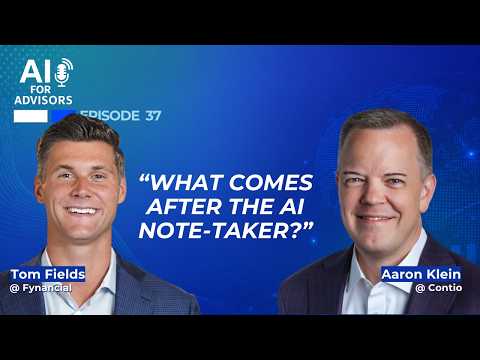
What Comes After the AI Note-Taker: Aaron Klein @ Contio, Tom Fields @ Fynancial

Aaron Klein & Tom Fields · Contio & Fynancial
1h 8mAug 20, 2026
Watch on YouTube
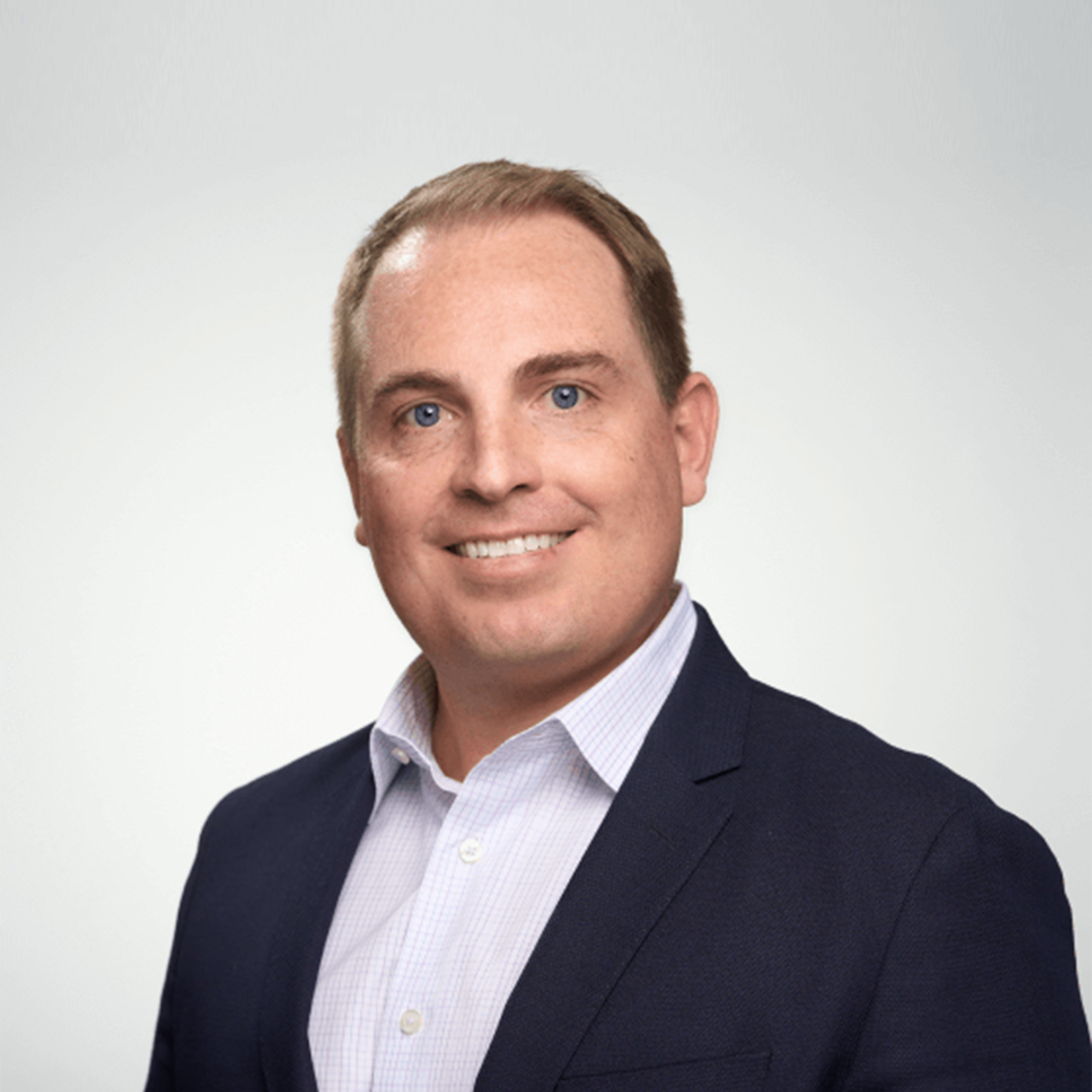
AI note-takers promised to fix advisor meetings. Adoption is nearly universal — and yet client retention hasn't meaningfully improved, and most advisors still walk into reviews without a real game plan. So what did the industry actually solve? Aaron Klein, who spent 12 years building Riskalyze into a category before starting over, argues the note-taker wave started at the wrong end of the problem: capturing conversations is easy, turning them into decisions and follow-through is the actual job. His new company, Contio, is built as an operating system layer rather than a standalone app — meant for partners to build on top of, not to lock advisors into. That's exactly what Tom Fields did. As the first partner built on Contio's MeetingOS, his company Fynancial takes that meeting data and turns it into the always-on mobile experience advisors' clients already expect from every other app on their phone. Together, they make the case that the real unlock isn't smarter transcription — it's open data, faster meeting prep, and giving clients a channel that isn't buried in email. What You'll Learn: Why Aaron Klein calls AI note-taking "starting at the wrong end of the problem" The difference between an "operating system" and a "platform" — and why Contio deliberately chose OS How Tom Fields built Fynancial as the first partner on Contio's MeetingOS, and what that partnership actually does for advisors Why locking up client data is a losing long-term strategy, even if it's tempting short-term Why older clients default to their phone as their primary computer — and what that means for advisor tech decisions Why meeting prep should happen a week or two out, not 30 minutes before The rapid-fire debate on the most overrated and underrated AI technology in wealth management right now Key Takeaways: AI note-takers solved the wrong problem. → Recording a meeting was never the bottleneck — turning what gets said into what gets done was. An operating system beats a platform. → Contio isn't trying to maximize time in its own app. It's built so partners like Fynancial can build entire products on top of its data layer. Locking up data is a losing strategy. → Firms that don't expose clear APIs or MCP access will lose customers to those that do — full stop. Speed is a relationship advantage, not just an efficiency one. → In a trust-driven business, how fast you respond to a client is itself part of the service. Meeting prep should happen days before the meeting, not minutes before. → The easier prep gets, the more tempting it is to do it last-minute — which defeats the point. Chapters: 00:00 Introduction and guest backgrounds 02:46 Aaron Klein's origin story: from Riskalyze to Contio 11:01 Tom Fields' origin story and how Fynancial started 16:53 Why AI note-takers started at the wrong end of the problem 29:31 Platforms vs. operating systems, and what Contio's API exposes 40:33 Why locking up data is a losing long-term bet 45:12 Layers of abstraction: building on foundation models vs. below them 51:07 Evidence that AI is actually making meetings better, not just faster 55:29 Rapid fire: what advisors should stop doing in meetings 1:00:57 Rapid fire: most overrated and underrated AI technology 1:08:05 Where to find Contio and Fynancial Why This Episode Matters: The AI note-taker wave made it easy to believe the meeting problem was already solved. This episode makes the opposite case: recording a meeting was always the easy part. The advisors and platforms that win from here will be the ones that treat meeting data as fuel for faster decisions and open ecosystems — not another walled garden. Aaron Klein and Tom Fields are building from opposite ends of that same idea, and the partnership between their companies is a live example of what an open, decision-first approach to meeting AI can look like in practice.
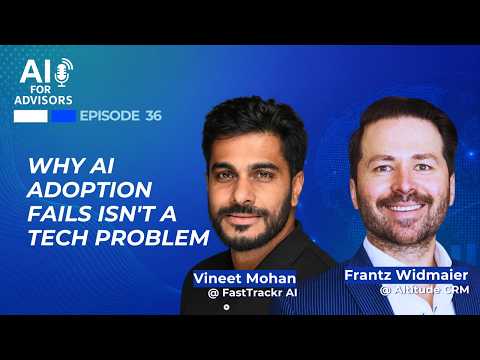
Why AI Adoption Fails: Vineet Mohan @ FastTrackr AI, Frantz Widmaier @ Altitude CRM

Frantz Widmaier & Vineet Mohan · Altitude CRM & FastTrackr AI
1h 1mAug 13, 2026
Watch on YouTube
Every advisor who's changed firms knows the drill: a blank intake form, a client asked to re-explain a hundred data points they've already given someone else, and a 90-day scramble that leaks 10-20% of assets out the door along the way. The tools to fix this have existed for a while. What's actually been missing is someone willing to own the entire mess — not just the data pipes, but the paperwork, the tracking, and the hundred spreadsheets nobody can find. This week, Mark and James talk to two founders tackling that exact problem from opposite directions. Vineet Mohan spent 14 years at HSBC before building FastTrackr AI, which handles advisor transitions end-to-end rather than just connecting data sources. Frantz Widmaier inherited a 45-year-old consulting firm, Bill Good Marketing, and is turning it into Altitude, an AI-native CRM built around an assistant called Pathfinder. The conversation keeps circling back to the same tension: the technology to move faster is already here. What's slow is getting advisors — and their clients — to trust it. What You'll Learn: - Why advisor transitions still take up to 90 days and why that delay costs firms real assets - The three distinct reasons advisors change firms — demographics, M&A, and breakaways — and why the "unlock" AI offers differs for each - Why "plug and play" is a myth for multi-step, edge-case-heavy workflows, even if it works fine for something like meeting assistants - What happened when Altitude's users pushed back against a better, but different, CRM interface - Why building AI features fast can outpace your users' ability to accept the change - How Salesforce going headless and MCP-friendly changes the build-vs-integrate calculus for CRM startups - Why the "harness layer" — the logic sitting between the model and the system of record — may be the more durable asset than either the model or the CRM - How advisor and client attitudes toward AI security are shifting Key Takeaways: Adoption fails on change management, not capability. → The tools already exist. The bottleneck is trust. Advisor transitions leak real money, not just time. → 10-20% of assets fall away during a firm change due to a slow, impersonal process. Plug and play works for narrow tasks, not messy workflows. → A meeting assistant can be plug and play; a multi-step transition still needs a human in the loop. Speed of building doesn't equal speed of adoption. → Shipping fast can backfire without walking users through the change in phases. The application layer is becoming the durable asset. → As models and CRMs commoditize, the "harness layer" between them may hold the real advantage. Chapters: 00:00 — The "token maxing" debate 00:34 — Welcome and intro 01:08 — James's product launch: Groundskeeper PM 02:55 — The .com vs .ai vs .io domain debate 03:58 — Guest introductions: Vineet Mohan and Frantz Widmaier 05:57 — Vineet's origin story: 14 years at HSBC to founding FastTrackr AI 09:42 — The real cost of advisor transitions: 90 days and leaking assets 13:18 — Why FastTrackr's end-to-end approach stands apart from "pipe" competitors 14:35 — How Bill Good Marketing used to manually run "firm changes" 17:38 — Tangent: AI ghosts and Silicon Valley's "Son of Anton" 18:47 — Frantz's origin story: from Bill Good Marketing to building Altitude 20:54 — Why running a software company and a services company at once nearly breaks you 24:37 — What surprised Frantz most about building a CRM: user resistance to change 26:50 — Can you build AI too fast? The change management problem 27:55 — Chat-first UI, Pathfinder, and opening up to MCP 31:37 — How Bill Good's marketing legacy shapes Altitude's content strategy 34:09 — Salesforce going headless, and system of record vs. system of action 36:25 — The "harness layer" and a future of agents talking to agents 40:33 — The real generational gap: advisor perception vs. client readiness 44:15 — How client attitudes toward AI and data security are shifting 46:31 — Tangent: sophisticated AI scams and deepfakes 48:23 — AI-written content, authenticity backlash, and the return of handwritten notes 53:03 — Rapid fire: the biggest misconception advisors have about AI 57:47 — Rapid fire: the most underhyped AI technology right now 1:01:11 — Wrap-up Why This Episode Matters: Most AI-in-wealth-management conversations focus on what the technology can now do. This one is more useful because it focuses on what still gets in the way after: users resisting a redesigned CRM, clients quietly more comfortable with AI than advisors assume, and a transition process that's slow less because of missing data than a poor experience. The practical takeaway for advisors: ask less about what a tool can do, and more about how a vendor plans to walk your team and clients through the change.
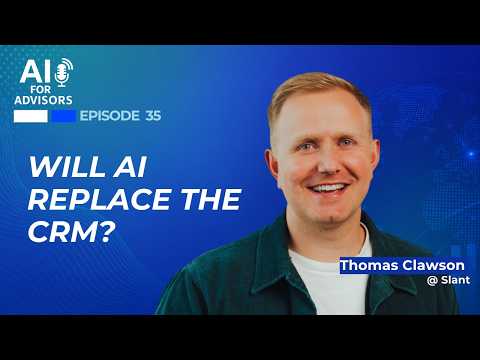
Will AI Replace the CRM? : Thomas Clawson @ Slant

Thomas Clawson · Slant CRM

1h 4mAug 6, 2026
Watch on YouTube
Most firms think AI changes software. The bigger shift is that AI changes workflows. As AI becomes the primary interface for getting work done, it's forcing firms to rethink a fundamental question: does the CRM still matter—or is it becoming obsolete? In this episode of AI for Advisors, James Cantwell and Mark Heynen sit down with Thomas Clawson, Co-Founder of Slant, to explore why AI-native software looks fundamentally different from legacy CRM platforms, what advisors actually need from a system of record, and why the future may be less about adding more technology and more about making existing workflows disappear. --- ### What You'll Learn * Why AI-native CRM isn't just legacy software with a chatbot attached * Whether AI agents will replace CRMs—or make them even more important * Why advisors still need a trusted system of record * How AI is changing client expectations before they ever meet an advisor * The tradeoffs between building specialized tools versus all-in-one platforms * Why customer experience has become a competitive advantage for advisor technology * How Slant went from marketing automation to one of wealth management's fastest-growing AI-native CRMs --- ### Key Takeaways **The CRM isn't disappearing** → AI changes how advisors interact with software, but firms still need a trusted source of truth. **AI shifts the focus from software to workflows** → The goal isn't more tools—it's fewer manual processes. **Great advisor technology reduces operational complexity** → The best platforms eliminate spreadsheets, disconnected apps, and repetitive work. **Clients are arriving more informed than ever** → AI isn't replacing advisors—it changes the conversations clients expect to have. **Relationships remain the competitive advantage** → AI can automate tasks, but trust is still built between people. --- ### Chapters 00:00 – Cold Open: Why Utah Produces WealthTech Companies 02:39 – Welcome & Introducing Thomas Clawson 04:10 – Should AI Be Regulated? 10:26 – The Story Behind Slant 18:18 – What Makes an AI-Native CRM Different? 26:27 – Will AI Replace the CRM? 35:35 – AI, Email & Advisor Workflows 38:02 – Building the Relationship CRM 41:46 – Should Advisors Build Software? 44:29 – Salesforce, Legacy Software & AI 48:25 – How AI Is Changing Client Expectations 52:31 – AI as an Educational Tool for Advisors 54:48 – Lightning Round 59:08 – Thomas's AI Stack & Waterboy 01:03:02 – Final Thoughts --- ### Why This Episode Matters The real question isn't whether AI replaces the CRM. It's whether today's CRM is designed for the way advisors will work tomorrow. As AI takes over more operational work, the firms that succeed won't necessarily have the biggest technology stack. They'll have systems that connect information, automate routine tasks, and help advisors spend more time where they create the most value: with clients. That's the conversation this episode explores.
The Future of AI Agents in Wealth Management: Freedom Dumlao @ Vestmark

Freedom Dumlao · Vestmark

46 minJul 17, 2026
Watch on YouTube
The more capable AI agents become, the less firms can treat them like ordinary software. An agent that can navigate systems, move information, communicate with colleagues, and take action begins to resemble an employee. That creates enormous leverage—but it also requires identity, permissions, oversight, and a clear record of what the agent did. Freedom Dumlao, CTO and Chief AI Officer at Vestmark, joins James Cantwell and Mark Heynen to explore how one of wealth management’s largest infrastructure providers is approaching that shift—from agent-assisted reconciliation to proactive advisor insights and virtual employees operating inside controlled environments. What You’ll Learn Why AI agents should receive permissions and oversight similar to human employees How computer-use agents change what is possible across disconnected systems Why task-specific tools make AI more reliable than prompting alone How workflow systems provide agents with memory, accountability, and audit trails Where agents can reduce manual work in reconciliation and portfolio operations How Vestmark Pulse turns market, portfolio, and CRM data into timely advisor actions Why governance—not technical capability—is the real constraint on enterprise adoption How fine-tuned models could outperform larger general-purpose models on specialized work Key Takeaways AI agents need employee-level governance → Separate identities, limited permissions, monitoring, and immediate access controls make autonomy safer. Tools matter more than memorized knowledge → AI becomes more reliable when it operates proven systems rather than generating answers from its training alone. The interface will move from dashboards to decisions → Agents can read underlying data, apply a framework, and surface the next action without requiring a human to navigate multiple screens. Workflow records still matter in an agentic system → Tickets and activity trails give agents memory while providing firms with visibility and regulatory defensibility. Specialized models may be the next efficiency advantage → A smaller model trained for one repeatable task can deliver greater speed and control than a powerful general-purpose model. Chapters 00:00 Why AI Agents Don’t Need Names 03:20 How Vestmark Powers Wealth Management 07:20 Freedom’s Path From Early Programming to FinTech 14:05 From Alexa to Vestmark 16:40 Building AI Safely Inside a Regulated Firm 19:42 When AI Can Control the Computer 20:49 The Security Risks of Computer Use 21:35 Treating AI Agents Like Employees 22:22 Why Tools Make AI More Reliable 26:12 Moving Beyond the AI Search Box 26:40 Should AI Preserve Existing Workflows? 28:02 Why Agents Still Need Workflow Systems 29:18 Memory, Observability, and Audit Trails 31:31 Redesigning Wealth Management Operations Around Agents 32:45 Agent-Assisted Reconciliation 34:44 Helping Advisors Scale Client Attention 37:21 Giving Virtual Employees Their Own Identities 39:27 Experimenting With OpenClaw and Hermes Safely 42:38 The Most Overhyped and Underhyped AI Tools 44:17 Turning Complex Information Into Timely Action 46:05 Why Note-Taking Is a Feature, Not the Product Why This Episode Matters The difficult part of deploying agents inside wealth management is no longer proving that they can perform useful work. It is deciding what they should access, how their actions should be observed, and when humans should remain responsible for the final decision. The firms that solve those management questions will be able to move beyond AI as an assistant—and begin redesigning how the work itself gets done. #AIForAdvisors #WealthManagement #FinancialAdvisors #RIA #AdvisorTech #WealthTech #ArtificialIntelligence #Vestmark

Know an advisor trying to make sense of AI?

Send them this. (They'll thank you later. Maybe.)

Featured Guests & Companies

Builders, operators, and AI nerds

Coming Soon

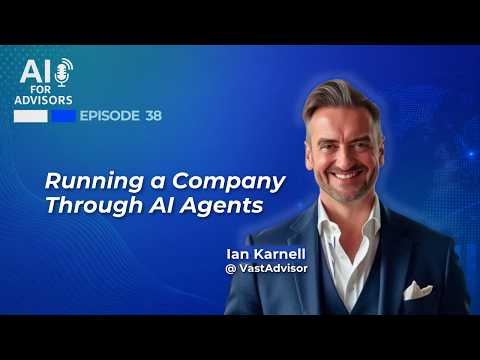
Ian Karnell
VastAdvisor

Ian Karnell

VastAdvisor

CEO & Co-Founder

Be Part of the Conversation

Have a contrarian view on advisor tech, or building something that doesn't fit neatly into a Gartner quadrant? This show is for founders, operators, and practitioners who can talk candidly about what works, what flopped, and what they'd never ship again. If that sounds like you (or someone you know), pull up a chair.